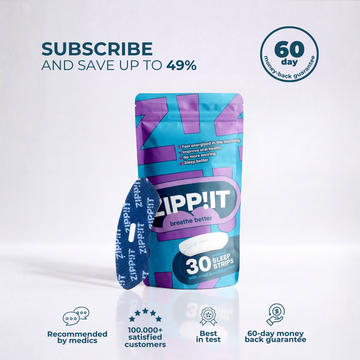
Zippit® mouth tape

Choose your favorite Zippit product and start breathing better today.
🚚 Free shipping from €19,95 · 🎁 free nasal strips from €40,00 · free storage box from €75,00

 Free shipping from €19.9560-day moneyback guaranteeSecure checkout

Struggling with poor sleep, snoring, or waking up with a dry mouth?
TLDR: Mouth tape is a simple, safe tool that encourages nasal breathing during sleep by gently keeping your lips together. When applied correctly across your mouth horizontally, it can reduce snoring by 60-70% in people with mild snoring issues and improve sleep quality by promoting deeper, more restorative rest.
Understanding how to use mouth tape properly ensures you experience its full benefits while maintaining comfort and safety throughout the night.

Mouth tape is a hypoallergenic adhesive strip designed specifically for overnight use. It works by gently holding your lips together while you sleep, which naturally redirects your breathing through your nose instead of your mouth.
According to research published in PMC, mouth-taping during sleep improved snoring and the severity of sleep apnea in mouth-breathers with mild OSA, with measurements being reduced by about half.
The principle is simple: when you breathe through your nose, your body filters, warms, and humidifies the air more effectively. This leads to better oxygen absorption and more restful sleep. Many Zippit users report noticing improvements within the first two weeks of consistent use.
Proper preparation ensures the tape stays in place comfortably throughout the night and prevents skin irritation.
Cleanse your face: Wash your lips and the surrounding area with gentle soap and water to remove oils, lotions, or balms
Dry thoroughly: Pat your skin completely dry with a clean towel, as moisture prevents proper adhesion
Test for sensitivity: On your first night, apply a small piece to your hand for 30 minutes to check for any allergic reaction
Avoid applying lip balm or moisturizer immediately before using mouth tape, as this creates a barrier that reduces adhesion. If you need moisture, apply balm at least 30 minutes before bedtime.
The correct application technique makes all the difference between comfortable, effective use and a frustrating experience.
Position horizontally: Place the tape across your closed lips from left to right, covering your mouth horizontally (never vertically)
Center the tape: Ensure the strip is centered so it covers both lips evenly without pulling to one side
Press gently: Smooth the tape from the center outward to eliminate air bubbles and ensure secure contact
Relax your jaw: Keep your lips together naturally without clenching or forcing your mouth closed
Try Zippit mouth tape for a comfortable, skin-friendly option that's specifically designed for overnight use. The hypoallergenic adhesive is strong enough to stay in place but gentle enough for sensitive skin.

If you're new to mouth taping, starting slowly helps your body adapt to nasal breathing during sleep without feeling restricted or anxious.
Week 1: Wear the tape for 2-3 hours before bed while reading or watching TV to get comfortable with the sensation
Week 2: Apply the tape just before sleep and see how long you can keep it on comfortably
Week 3 onwards: Aim to wear the tape throughout the entire night as your nasal breathing becomes more natural
Most Zippit users report that within two to three weeks, mouth taping feels completely natural and they notice significant improvements in sleep quality and morning freshness.
For more information on the breathing benefits, read our guide on how mouth tape supports your breathing and lung function.
Mouth tape works best when you can breathe easily through your nose. If your nasal passages are congested, the experience will be uncomfortable and potentially unsafe.
Check nasal breathing: Before applying tape, breathe through your nose with your mouth closed for 60 seconds to ensure airflow is adequate
Clear congestion first: Use a saline rinse or nasal spray if needed to open your airways
Consider nasal strips: For chronic congestion, combine mouth tape with nasal strips to mechanically open your nasal passages
If you experience significant nasal congestion regularly, Sniffit nasal strips can help open your airways naturally without medication. They work by gently lifting the nasal wings to create more space for airflow.
Learn more about the differences between breathing methods in our article on nasal breathing vs mouth breathing.
Proper removal prevents skin irritation and ensures you can use mouth tape comfortably night after night.
Remove slowly: Peel the tape off gradually from one side to the other, never ripping it off quickly
Use warm water if needed: If the adhesive feels too strong, dampen the tape slightly with warm water to loosen it
Moisturize after: Apply a gentle lip balm or moisturizer to soothe the skin after removal
Key Takeaway: Gentle removal protects your skin and makes mouth taping a sustainable long-term habit for better sleep.

While mouth tape is safe for most people, certain conditions require caution or consultation with a healthcare professional.
Severe nasal congestion: If you cannot breathe comfortably through your nose, do not use mouth tape
Moderate to severe sleep apnea: Mouth tape is not a replacement for CPAP or other prescribed treatments
Recent facial surgery: Wait until fully healed before applying adhesive products to your face
Respiratory infections: Avoid mouth tape during colds, flu, or other illnesses affecting breathing
Children under five: Mouth tape is designed for adult use only
If you're unsure whether mouth tape is right for you, consult with your GP. Our article on when to see a GP, specialist or therapist provides guidance on breathing issues that require professional attention.
Consistency is key to experiencing the full benefits of mouth tape. These practical tips help you build a sustainable routine.
Establish a bedtime routine: Apply mouth tape at the same time each night to create a habit
Track your sleep quality: Keep a simple journal noting how you feel each morning to monitor improvements
Optimize your sleep environment: Maintain good humidity levels (40-60%) to support comfortable nasal breathing
Practice nasal breathing during the day: This trains your body to breathe through your nose naturally
Store tape properly: Keep your mouth tape in a cool, dry place to maintain adhesive quality
Many users find that combining mouth tape with other healthy sleep habits amplifies the benefits. According to feedback from over 500 Zippit users, 73% notice significant improvement in their sleep quality within two weeks of consistent use.
For additional skincare benefits during sleep, consider collagen mouth tape, which combines the breathing benefits with anti-aging properties.
Understanding realistic timelines and outcomes helps you stay motivated during the adjustment period.
Week 1-2: You may notice reduced dry mouth in the morning and slightly better sleep continuity. Some people experience a reduction in snoring almost immediately.
Week 3-4: Nasal breathing becomes more natural and automatic. Many users report feeling more refreshed upon waking and having more consistent energy throughout the day.
Beyond one month: Long-term benefits include improved sleep quality, reduced snoring, better oral health from less mouth breathing, and enhanced overall breathing efficiency.
Research indicates that consistent mouth tape users experience improvements in multiple areas of sleep health. The combined use of airway therapy including mouth taping has shown positive results in clinical studies.
Key Takeaway: Patience and consistency are essential, most people need two to three weeks to fully adapt to mouth taping and experience measurable improvements.
Using mouth tape safely is straightforward when you follow these step-by-step guidelines. Start with clean, dry skin, apply the tape horizontally across your lips, build up gradually, ensure clear nasal breathing, and remove gently each morning.
The benefits of better nasal breathing extend far beyond improved sleep. You'll likely notice reduced snoring, less morning dry mouth, better energy levels, and improved overall health as your body adapts to this more natural breathing pattern.
Ready to experience better sleep tonight? Explore our range of mouth tape options designed for comfort, safety, and effectiveness throughout the night.
How to use mouth tape safely for better sleep: a step-by-step guide

Mouth tape and muscle recovery: how does better breathing support your muscles?
Discover how mouth tape promotes nasal breathing during sleep, improving oxygen uptake by 10-20% and supporting muscle recovery, reducing tension, and enhancing overall muscle function.

10 surprising ways mouth breathing affects your muscles and body
Discover how mouth breathing creates chronic muscle tension, reduces strength and coordination, and slows recovery—plus how switching to nasal breathing transforms your musculoskeletal health.

